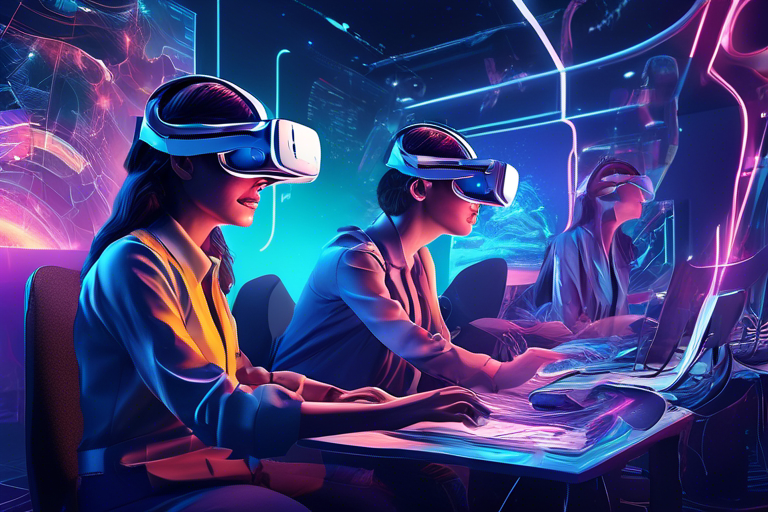
Virtual Reality and Space Exploration: The Future of Immersive Space Games
Space exploration has captivated humanity for centuries, inspiring a sense of awe and wonder at the vastness of the cosmos. While the dream of physically venturing into the far reaches of space remains elusive for most, the rise of Virtual Reality (VR) technology is bringing this fantasy closer to reality within the world of video games. VR offers an unprecedented level of immersion, allowing players to experience space exploration like never before—floating weightlessly among distant stars, navigating the surfaces of alien worlds, and piloting advanced spacecraft in zero gravity.
As VR technology continues to evolve, it has the potential to completely transform the way we experience space exploration games. In this article, we’ll explore how VR is shaping the future of immersive space games, highlighting key titles that are pushing the boundaries of space exploration and what the future might hold for VR-driven space experiences.
1. Why VR is Perfect for Space Exploration Games
Virtual Reality offers several features that make it an ideal platform for space exploration games:
1.1. Immersive Environments
The vast, open environments of space are a natural fit for VR. The feeling of scale, depth, and emptiness can be beautifully captured in virtual space, making players feel like they are truly floating in the cosmos. Whether you’re piloting a spaceship, exploring a distant planet, or simply gazing at the stars, VR adds a sense of presence that flat-screen games simply can’t replicate.
1.2. Zero-Gravity Experience
One of the most unique aspects of space is the sensation of weightlessness or zero gravity. VR allows for a more accurate simulation of this experience. Through hand-tracking and motion controllers, players can interact with the environment in ways that mimic real-life movements, creating a truly immersive experience where you feel as though you are floating in space.
1.3. Real-Time Exploration
Space exploration involves a great deal of travel, and VR allows players to traverse vast distances in ways that feel natural. Games can present space travel as a slower, more meditative experience, where players can enjoy the beauty of space as they navigate from one celestial body to another, all in real-time.
1.4. Interactive Spacecraft and Technology
Spacecraft and space stations are often key elements in space exploration games. VR allows players to experience piloting spacecraft in full detail, interacting with dashboards, buttons, and systems as if they were an actual astronaut or captain in charge of a vessel. This level of interactivity brings a sense of realism and complexity that’s difficult to achieve with traditional gaming methods.
2. Notable VR Space Exploration Games
Several VR games have already made strides in capturing the essence of space exploration. Here are some standout titles that show the potential of immersive space games:
2.1. Elite Dangerous (VR-Compatible)
Developer: Frontier Developments
Elite Dangerous is one of the most renowned space simulators, and its VR support enhances the already vast, immersive universe. Players can explore a 1:1 scale Milky Way galaxy, trade, fight, and mine—whether they’re piloting a ship or engaging in space combat.
- VR Features: Piloting a ship in VR is incredibly immersive, as players are able to look around the cockpit, interact with control panels, and even glance out into the stars as they explore the galaxy. The sense of scale and detail is magnified, making deep space exploration even more exciting.
- Future Potential: As the game continues to evolve, it’s likely that additional features will expand the scope of VR, enhancing both ship-to-ship combat and planetary exploration.
2.2. Star Trek: Bridge Crew (2017)
Developer: Red Storm Entertainment
For Star Trek fans, Star Trek: Bridge Crew is a unique VR experience that allows players to take on the role of one of the bridge officers aboard a starship. Whether you’re the captain, engineer, tactical officer, or helm officer, you work together with other players to navigate through the stars.
- VR Features: The game allows players to fully interact with the bridge console, communicate with fellow crew members, and take on real-time missions. The immersive VR interface makes it feel as though you’re actually on the bridge of a starship, controlling everything from shield systems to weapons.
- Future Potential: The game’s ongoing updates could allow for more expansive missions and customization of ships, adding greater depth to the experience.
2.3. No Man’s Sky VR (2019)
Developer: Hello Games
Originally released as a traditional space exploration game, No Man’s Sky expanded into the world of VR, offering a fresh new perspective on the game’s procedurally generated universe. With VR, players can explore alien planets, build bases, pilot ships, and interact with other players in an immersive 3D world.
- VR Features: The game’s vast open-world environments are perfectly suited for VR. Players can explore planets up close, take part in space battles, and build bases, all while experiencing the full scale and beauty of the universe.
- Future Potential: The continuous updates to No Man’s Sky provide new features, making it one of the most dynamic and expansive VR space experiences available. Players can expect more immersive missions, smoother mechanics, and additional planets to explore.
2.4. Lone Echo (2017)
Developer: Ready At Dawn
Lone Echo is a narrative-driven VR game that places players in the role of an AI aboard a space station orbiting Saturn’s moon, Titan. Players interact with their human counterpart, solve puzzles, and uncover a deep mystery in zero gravity.
- VR Features: The game takes full advantage of zero-gravity environments. Players can float through the station, use their hands to interact with the environment, and even perform manual repairs to the station’s systems.
- Future Potential: The game’s detailed space station design and narrative structure allow for deep immersion. Additional missions and more complex interactions could take the game’s VR mechanics even further.
3. What VR Space Games Can Learn from Real Space Exploration
As VR technology continues to advance, there are several key aspects of real-world space exploration that developers could incorporate to create even more realistic and immersive experiences:
3.1. Simulating Real-Time Space Travel
In real space exploration, traveling from one planet to another can take years. While No Man’s Sky and Elite Dangerous offer fast-paced exploration, incorporating more realistic time dilation (such as requiring travel time for ships to reach distant stars) could add a sense of gravity to space exploration, forcing players to plan long journeys or interact with new systems during their travels.
3.2. Realistic Planetary Exploration
In real life, planetary exploration requires scientific instruments like rovers, landers, and drones to gather data. Future VR space games could enhance exploration by adding more realistic planetary surfaces, requiring players to use instruments to gather resources, sample materials, and analyze alien ecosystems. This would add a more methodical, scientific approach to exploration.
3.3. Spacecraft Design and Customization
In real-world space missions, spacecraft are highly customizable based on mission needs. VR space games could integrate more advanced spacecraft design systems, allowing players to build and modify their ships with a greater emphasis on engineering and design. Players could choose propulsion systems, life support, and technology specific to the environments they’re exploring.
3.4. Space Hazards and Challenges
Space is fraught with challenges like radiation, solar flares, micrometeorites, and gravitational anomalies. Adding these hazards to VR space games would make players more aware of the dangers they face while exploring distant worlds. Players could be tasked with responding to these environmental challenges, such as managing radiation shielding, patching up breaches, or finding shelter during solar storms.
4. The Future of VR Space Exploration Games
Looking ahead, the future of VR space exploration games is incredibly exciting. As VR technology continues to improve, we can expect the following advancements:
4.1. Higher Levels of Immersion
With the growth of VR hardware, including more sophisticated haptic feedback, motion tracking, and even full-body suits, the immersion level in space games will only increase. Players might feel the vibrations of their spacecraft’s engines, the impact of asteroids, or the subtle weightlessness of zero gravity.
4.2. Multiplayer VR Space Exploration
Multiplayer VR is a huge area of potential for space exploration games. Imagine working together with other players in real-time to colonize new planets, maintain spacecraft, and explore the cosmos, all while communicating through voice chat and interacting physically in a shared space.
4.3. Fully Immersive Space Stations and Habitats
Future games could introduce detailed, interactive space stations and habitats where players can manage every aspect of life in space, from science labs to farming modules. These stations could evolve as players progress through the game, with new structures, technologies, and challenges becoming available as they explore.
4.4. Integration of AI and Procedural Generation
Procedural generation already plays a significant role in many space games, and integrating advanced AI systems will allow for even more dynamic and unpredictable space environments. Players could encounter intelligent alien species, unknown phenomena, and evolving space landscapes, making each journey feel unique and full of surprises.
Conclusion: The Infinite Possibilities of VR and Space Exploration
Virtual Reality is undoubtedly transforming how players experience space exploration games, offering unparalleled immersion, realism, and interaction. As VR technology continues to evolve, it will push the boundaries of what is possible in space-based gameplay, making the vastness of space feel more accessible and tangible than ever before.
The future of immersive space exploration is vast and full of potential, with endless possibilities for realistic space travel, detailed planetary exploration, and deeper, more interactive experiences. As developers continue to harness the power of VR, space games will undoubtedly evolve into even more complex and thrilling adventures, bringing players closer to the stars—and the ultimate frontier—than ever before.