The Role of Black Holes in Video Games: Fact or Fiction?
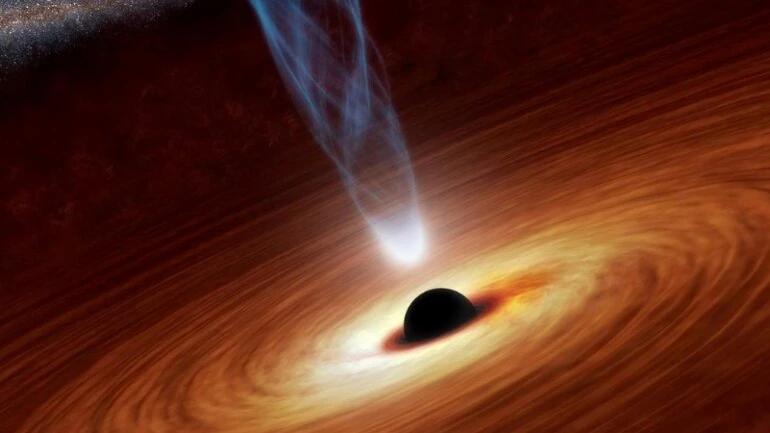
Black holes are among the most mysterious and fascinating objects in the universe. These massive cosmic entities, whose gravitational pull is so strong that not even light can escape, have been a source of inspiration and intrigue for scientists, astronomers, and storytellers alike. In the realm of video games, black holes often serve as key plot devices, mechanics, or even background elements. However, their portrayal in gaming doesn’t always align with the scientific facts. Let’s explore how black holes are represented in video games and whether they are portrayed with accuracy or are simply creative fiction.
1. Black Holes as Game Mechanics: Fun or Feasible?
In many video games, black holes serve as dynamic game mechanics, presenting players with unique challenges or opportunities. These in-game black holes may not always adhere to the laws of physics, but they provide thrilling gameplay experiences.
Example: Super Mario Galaxy (2007)
In Super Mario Galaxy, black holes act as gravitational obstacles. Players must navigate around or through them, with the black hole’s gravitational pull affecting the trajectory of Mario’s jumps or the movement of objects. The game’s black holes are often represented by swirling, colorful vortexes that are more visually appealing than scientifically accurate.
Game Fiction vs. Reality:
- Fact: In reality, black holes exert extreme gravitational forces on anything near them. Objects and light are stretched and compressed in a phenomenon known as “spaghettification.” In Super Mario Galaxy, the black holes are more of a hazard or environmental challenge, drawing from the concept of gravity without getting into the real consequences of crossing the event horizon.
- Fiction: Black holes in the game are safe zones where Mario can land or jump off, which is far from the destructive forces that would occur near an actual black hole.
2. Black Holes as Story Devices: Plot Twists and Cosmic Destruction
Beyond their gameplay functions, black holes are often used as plot devices in video games to facilitate dramatic storylines, cosmic destruction, or exploration of the unknown.
Example: Mass Effect Series
In the Mass Effect series, black holes play a significant role in both the backstory and main gameplay. The mass relays, which allow faster-than-light travel between star systems, are often depicted as being linked to black holes. Additionally, black holes are referenced in the lore as crucial to the galaxy’s history, with the Reapers being tied to the mysteries of space-time and potentially black hole-like entities.
Game Fiction vs. Reality:
- Fact: The concept of using black holes or artificial wormholes to allow faster-than-light travel is speculative but not entirely unfounded. Some theories in physics propose that wormholes (hypothetical passages through space-time) could be formed through the extreme curvature of space caused by black holes.
- Fiction: In Mass Effect, players can interact with black holes in ways that allow for space travel or harnessing black holes’ energy. In reality, manipulating or interacting with black holes is far beyond our current technological capability, and approaching one would lead to inevitable destruction due to immense gravitational forces.
3. Black Holes as Cosmic Threats: Destruction and Catastrophe
Video games also love to use black holes as ultimate threats that can wipe out civilizations or entire star systems. These cosmic threats can serve as the game’s primary antagonist or as a climactic event in the story.
Example: No Man’s Sky (2016)
In No Man’s Sky, black holes are used as part of the player’s journey to the center of the universe. Players can use black holes to travel vast distances in space, though they are often seen as unpredictable, hazardous, and potentially deadly.
Game Fiction vs. Reality:
- Fact: In reality, black holes have extremely strong gravitational fields, and crossing the event horizon (the point of no return) would lead to a singularity, where space-time is infinitely warped. Traveling through or near a black hole would destroy anything that comes too close.
- Fiction: In No Man’s Sky, players can use black holes as shortcuts to traverse great distances quickly. While the idea of using a black hole as a transportation system is an intriguing concept, the effects of real black holes would be far more catastrophic and lethal than what is portrayed in the game.
4. Black Holes as Scientific Wonders: Education or Fantasy?
Some games aim to be more scientifically accurate, using black holes to educate players about space science or make them part of complex in-game mechanics.
Example: Elite Dangerous (2014)
In Elite Dangerous, black holes are realistically modeled celestial objects. Players can visit them and experience their incredible gravitational pull firsthand. The game incorporates real astronomical data, and black holes can be seen as part of the galaxy’s infrastructure, affecting the trajectory of ships and navigating the surrounding stars.
Game Fiction vs. Reality:
- Fact: Elite Dangerous does a good job of presenting black holes as real astronomical phenomena, from their gravity well to their appearance. However, like all space games, it does take liberties with how players interact with them, allowing for exploration and travel close to the event horizon.
- Fiction: In real life, getting too close to a black hole would be fatal. The game, however, lets players survive and interact with black holes, which is more a narrative tool than an accurate representation of reality.
5. The Singularity: A Symbol of Infinite Power or a Cosmic Trap?
A singularity is the theoretical point at the center of a black hole where gravitational forces are so intense that space-time curves infinitely. In many games, this concept is often used symbolically to represent immense power, mystery, or a final destination.
Example: Event Horizon (Video Game Tie-In)
In the video game adaptation of the cult-classic film Event Horizon, players are thrust into a narrative involving a spaceship that travels into a black hole and emerges with unimaginable horrors. The black hole in this story is tied to the concept of the singularity—a portal to another dimension that brings destruction.
Game Fiction vs. Reality:
- Fact: The singularity at the center of a black hole is indeed a point where known physics break down. It represents a boundary between the known universe and realms that are beyond human understanding.
- Fiction: Many games treat the singularity as a mysterious power source or a rift between dimensions, often ignoring the reality that it is an inhospitable, lethal force that would destroy anything that crosses its threshold.
6. Black Holes in Space Combat: The Ultimate Weapon or Escape Mechanism?
In space combat games, black holes can serve as ultimate weapons or dramatic escape routes. They are sometimes used as strategic tools in battles, with players being able to use them to trap enemies or make daring getaways.
Example: Stellar Impact (2011)
In Stellar Impact, players can strategically use black holes to their advantage in space battles, either to trap opponents in their gravitational field or use them to escape quickly from dangerous situations.
Game Fiction vs. Reality:
- Fact: Black holes would exert an immense gravitational pull on everything within a certain radius. While theoretically, one could escape a black hole’s pull using intense speeds or advanced technology, it would be impossible to control such a powerful force in the way it’s portrayed in the game.
- Fiction: In Stellar Impact, black holes are used as tactical elements in space combat, allowing players to make escapes or traps, something that is far beyond the real effects of black holes in space.
Conclusion: Fact or Fiction?
While black holes are fascinating, dangerous, and mysterious objects in real life, video games often take significant creative liberties with their portrayal. Fact: The science behind black holes is incredibly complex and often incomprehensible, and any game that incorporates them is bound to simplify or exaggerate the science for dramatic effect. Fiction: The use of black holes in video games often leans toward providing exciting gameplay mechanics, story twists, and exploration opportunities, rather than offering an accurate representation of what would happen near or inside a real black hole.
In the end, the portrayal of black holes in video games combines fact with fiction, using real astronomical principles as a foundation but embellishing them to enhance the player experience. Whether they’re acting as cosmic hazards, shortcuts, or symbols of ultimate power, black holes will continue to play an important role in space-based games, inviting players to engage with the most mysterious objects in the universe in ways that might not be possible—or survivable—in real life!