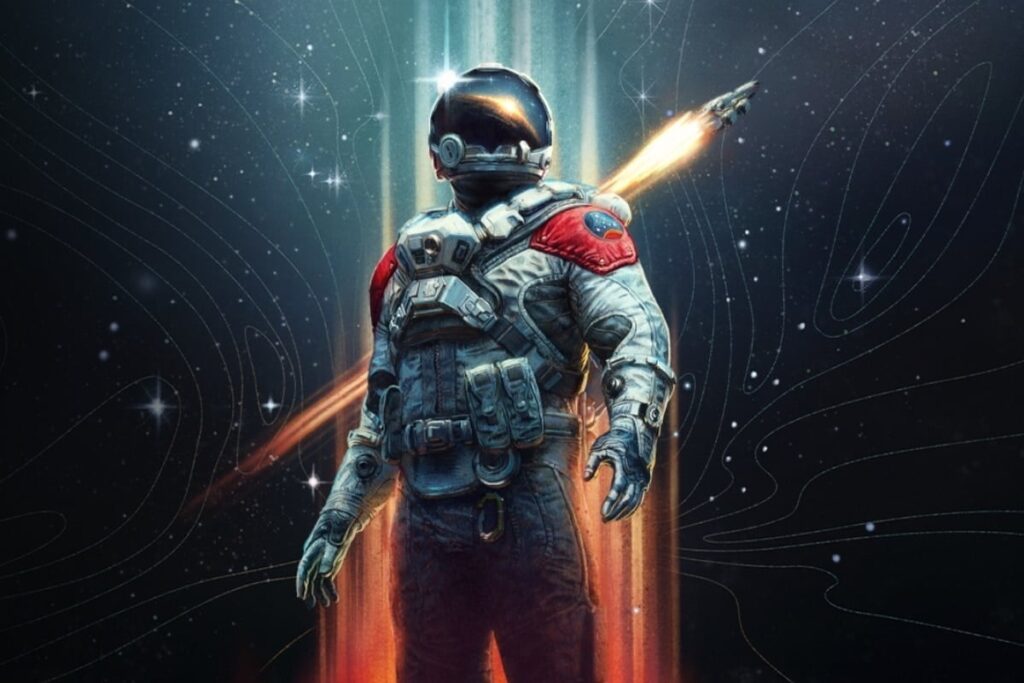
The Evolution of Space-Themed RPGs: From Mass Effect to Starfield
The vast expanse of space has always been fertile ground for storytelling, and few genres have embraced it as dynamically as the role-playing game (RPG). From interstellar diplomacy to epic space battles and deeply personal character arcs, space-themed RPGs have steadily evolved over the years—pushing the limits of world-building, player choice, and immersion.
In this article, we’ll chart the course of space-themed RPGs, from the groundbreaking Mass Effect trilogy to Bethesda’s ambitious Starfield, exploring how the genre has matured in scope, complexity, and player agency.
🌌 1. The Rise of Narrative-Driven Space RPGs
🔹 Mass Effect (2007–2012) – BioWare’s Space Opera Masterpiece
When Mass Effect debuted in 2007, it set a new standard for space RPGs with its cinematic storytelling, rich character development, and moral choice system. Set in a meticulously built universe, it placed players in the role of Commander Shepard, tasked with uniting alien species against a galactic threat.
- What it did right:
- Deep lore and world-building, including a Codex filled with science and history.
- The Paragon/Renegade morality system allowed players to shape Shepard’s personality.
- Relationships with crew members created emotional depth and replayability.
- Consequences carried across the trilogy—your choices mattered.
- Impact on the genre:
Mass Effect proved that sci-fi RPGs could be as emotionally resonant as fantasy RPGs like The Elder Scrolls or Dragon Age. It created a blueprint for how space narratives could be personal, political, and epic—all at once.
🛸 2. Expanding the Sandbox: Open Worlds in Space
🔹 The Outer Worlds (2019) – Satirical Sci-Fi with Fallout DNA
Obsidian Entertainment’s The Outer Worlds fused the DNA of Fallout: New Vegas with a corporate-dystopia-in-space setting. It offered players multiple ways to solve problems—through combat, speech, stealth, or sheer charm.
- Highlights:
- Companion-focused missions and rich character backstories.
- Modular dialogue choices affecting quests and endings.
- A smaller, curated universe rather than a procedurally generated one.
- What it added to the evolution:
It showed that space RPGs didn’t have to be massive to be meaningful. With tight writing and morally ambiguous choices, it offered a focused, story-driven experience in a compact galaxy.
🔹 ELEX & GreedFall – Genre-Blending Experiments
While not purely space-themed, games like ELEX mixed sci-fi with fantasy in open-world RPGs, showing a willingness to experiment within the genre. These games pushed boundaries by blending genres and themes—cybernetics meet swords, alien ruins next to medieval villages.
🚀 3. The Next Frontier: Starfield (2023)
🔹 Bethesda’s First New IP in 25 Years
When Bethesda announced Starfield, expectations were sky-high. Billed as “Skyrim in space,” it promised over 1,000 planets to explore, deep character customization, ship building, and the hallmark Bethesda-style questing.
- Major Innovations:
- Procedurally generated planets with handcrafted hubs like New Atlantis.
- Shipbuilding and space combat added a whole new gameplay layer.
- A perk-based skill system tied to use and mastery.
- Emphasis on faction dynamics and moral ambiguity.
- Criticisms and Praise:
- Some found the vast universe too sterile or repetitive.
- Others praised the depth of lore and the freedom to role-play as explorer, pirate, diplomat, or anything in between.
- Why Starfield matters: It marks a major milestone in the genre’s evolution: the fusion of large-scale procedural exploration with RPG systems. While not flawless, it demonstrates a hunger for immersive space experiences on a galactic scale.
🌠 4. Key Evolutionary Milestones in Space RPGs
| Era | Game | Contribution |
|---|---|---|
| 2000s | Mass Effect | Branching narratives, squad-based choices, morality system |
| 2010s | The Outer Worlds, Mass Effect: Andromeda | Compact narratives, branching solutions, satire |
| 2020s | Starfield | Massive exploration + player agency in a procedural galaxy |
🧬 5. Core Elements That Have Evolved
✅ 1. Player Agency & Moral Complexity
Early RPGs like Mass Effect laid the groundwork for moral choices, but newer games have blurred the lines further. The Outer Worlds lets you play as a greedy capitalist or an anti-corporate rebel, with no clear “good guy.”
✅ 2. Exploration Scale
From the Normandy’s handful of star systems to Starfield‘s 100+ star systems, space RPGs have drastically expanded the scope of exploration, albeit with varying success in terms of meaningful content.
✅ 3. Customization
Modern RPGs have embraced player-driven customization—from building and naming your spaceship in Starfield, to choosing your crew and altering your own body in games like Cyberpunk 2077: Phantom Liberty (sci-fi adjacent).
✅ 4. Companions & Crew Dynamics
From Garrus and Liara to Sam Coe and VASCO, companion dynamics have remained a staple of space RPGs. Today’s games deepen these relationships through side missions, romance options, and loyalty-based outcomes.
🔭 6. What’s Next for Space-Themed RPGs?
- Multiplayer & Shared Universes: While most space RPGs have been single-player, future titles may offer shared-space adventures akin to Star Citizen or co-op expansions.
- Hard Science Integration: As interest in realism grows, future RPGs may incorporate actual astrophysics, terraforming, or near-future tech concepts.
- Deeper Alien Cultures: Future RPGs could move beyond humanoid aliens and develop deeply foreign species with unique languages, customs, and conflicts.
- AI Integration: Companion AIs, dynamically generated quests, or procedural diplomacy systems could shape emergent storytelling.
🪐 Conclusion: A Genre Without Limits
From the emotionally charged diplomacy of Mass Effect to the open-ended discovery of Starfield, space-themed RPGs have come a long way in a short time. They’ve evolved from scripted, corridor-driven stories to sprawling, player-driven universes filled with moral ambiguity, alien intrigue, and limitless stars to chart.
As technology continues to push boundaries, the space RPG will only grow more immersive, more complex, and more personal. Whether you’re piloting your own ship, forming uneasy alliances with alien factions, or just looking for your place in the stars, the final frontier of storytelling is still wide open—and waiting.
Want a version of this formatted as a blog post or feature article for a gaming website? I can help polish and adapt it!