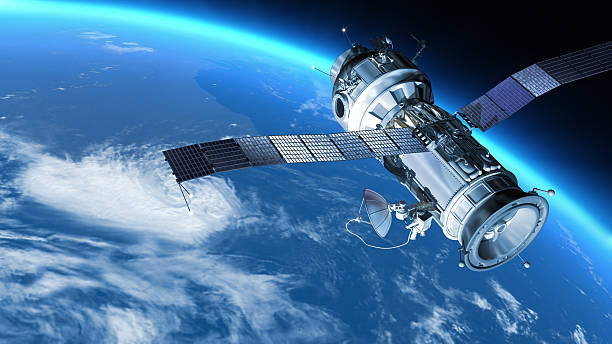
Real-Life Space Tech That Could Inspire Future Games
The exploration of space and the advancements in space technology have always sparked the imaginations of game developers. From futuristic space combat to realistic simulations of celestial mechanics, the tech that powers space exploration provides an incredible foundation for game design. As new technologies emerge, they not only shape our understanding of the cosmos but also inspire game developers to create immersive and innovative experiences. Here’s a look at some real-life space technologies that could inspire the next generation of video games.
1. SpaceX’s Reusable Rockets (Starship & Falcon Series)
Tech Overview:
SpaceX has revolutionized space exploration with its reusable rocket technology, particularly with the Falcon 9 and Starship systems. These rockets are designed to land back on Earth after launching their payloads, dramatically reducing the cost of access to space and making space missions more sustainable.
Game Inspiration:
- Concept for Games: Imagine a game where players are tasked with designing and launching their own reusable rockets. Players could manage everything from the construction and testing phases to launching and then recovering their rockets to reuse them in future missions.
- Gameplay Possibilities: A futuristic simulation game, where players can manage a private space company, build reusable launch systems, and test various rocket technologies in a Mars colonization scenario or deep space exploration game.
Example Games It Could Inspire: Kerbal Space Program (though not specifically for reusability), Surviving Mars (with a focus on space logistics and technology reuse).
2. Space Habitat Modules (NASA’s Gateway & Lunar Habitats)
Tech Overview:
NASA is working on lunar habitats and orbital platforms like the Lunar Gateway as part of its Artemis program. These habitats will serve as living spaces for astronauts on the Moon and potentially for long-term missions to Mars. These modules are designed to withstand harsh environments and support human life for extended periods.
Game Inspiration:
- Concept for Games: Space exploration games could integrate realistic life-support systems and habitat management. Players could design and maintain these habitats while surviving in space, ensuring power, oxygen, food, and safety from radiation.
- Gameplay Possibilities: A survival or colony management game where players must build and maintain a sustainable base in space or on the Moon, facing challenges like meteor impacts, energy shortages, and supply chains from Earth.
Example Games It Could Inspire: Surviving Mars, The Martian VR Experience, Planet Coaster (with space-related expansion).
3. Autonomous Spacecraft (NASA’s Perseverance Rover)
Tech Overview:
The Perseverance Rover on Mars, along with other autonomous spacecraft, uses sophisticated AI systems to navigate and explore distant worlds without human intervention. These rovers can analyze samples, avoid obstacles, and even collaborate with other robotic units in space exploration missions.
Game Inspiration:
- Concept for Games: AI-driven robots or drones could be a central gameplay mechanic. Players could control autonomous robots exploring alien worlds or engage in scavenging missions on distant planets, gathering resources while avoiding hazards and dealing with unpredictable AI behavior.
- Gameplay Possibilities: A game that combines elements of real-time strategy and space exploration, where players deploy autonomous rovers to explore unknown planets, solve puzzles, and discover alien artifacts.
Example Games It Could Inspire: No Man’s Sky (exploration-focused), Robocraft (robot construction and combat), Astroneer (exploration with AI-driven systems).
4. Space Telescopes (James Webb Space Telescope)
Tech Overview:
The James Webb Space Telescope (JWST) is the most powerful space telescope ever built, designed to explore the deepest parts of the universe in infrared light. It will enable scientists to study distant galaxies, black holes, and the formation of stars and planetary systems.
Game Inspiration:
- Concept for Games: A space exploration or simulation game could feature a powerful telescope system like JWST, allowing players to explore distant galaxies, star systems, and other celestial phenomena. Players could discover hidden alien civilizations or unravel mysteries of the universe through astronomical observations.
- Gameplay Possibilities: A puzzle-solving and exploration game where players are tasked with gathering and analyzing data from distant galaxies using a high-tech space telescope. The goal could be to unlock secrets of the universe or track alien signals across vast distances.
Example Games It Could Inspire: Elite Dangerous (for deep-space exploration), Universe Sandbox (for galaxy simulation), EVE Online (space exploration and discovery mechanics).
5. Space Mining Technology (Asteroid Mining)
Tech Overview:
Companies like Planetary Resources are working on asteroid mining technology, which aims to extract valuable resources like water, minerals, and metals from asteroids. This technology could pave the way for mining operations in space, turning asteroids into resource hubs for future space missions.
Game Inspiration:
- Concept for Games: A game where players can manage or participate in asteroid mining missions could involve resource extraction, mining operations, and space engineering. Players could also encounter rival mining companies or alien species while mining asteroids.
- Gameplay Possibilities: A strategy-based space game where players mine asteroids, trade rare minerals, and build vast space stations using resources from the deep space frontier. The game could focus on resource management, economic trade, and intergalactic competition.
Example Games It Could Inspire: Star Citizen, EVE Online, Astroneer (for mining mechanics).
6. Ion Thrusters (NASA’s Dawn Mission)
Tech Overview:
NASA’s Dawn spacecraft used ion propulsion to travel between different asteroids in the asteroid belt, enabling efficient deep space travel. Ion thrusters are more efficient than traditional chemical rockets, making them ideal for long-duration space missions.
Game Inspiration:
- Concept for Games: A game could feature a propulsion system based on ion thrusters, where players use these highly efficient but slow engines to explore distant galaxies or solar systems. Players would need to plan their routes carefully to conserve fuel and energy.
- Gameplay Possibilities: A space simulation or RPG where players command a deep-space exploration vessel, navigating vast distances using ion thrusters. The game could focus on resource management, long-term missions, and careful navigation of space.
Example Games It Could Inspire: Elite Dangerous (for space navigation), Star Citizen (for long-haul space missions), Kerbal Space Program (for ion propulsion simulations).
7. Solar Sails (Breakthrough Starshot)
Tech Overview:
Breakthrough Starshot is an initiative to send lightweight, solar-powered nanocraft to Alpha Centauri, using solar sails that catch the pressure of sunlight for propulsion. This technology could enable us to send spacecraft to other star systems in a relatively short amount of time (compared to conventional methods).
Game Inspiration:
- Concept for Games: A space exploration game could introduce solar sails as a propulsion method, requiring players to adjust the angle and speed of their sails to harness sunlight and travel across vast distances.
- Gameplay Possibilities: A space travel game where players use solar sails to reach distant stars, managing everything from navigation and speed to maintaining the sails in optimal condition. The game could have a strong emphasis on strategy and long-term planning.
Example Games It Could Inspire: No Man’s Sky (for deep space exploration), Elite Dangerous (for space travel), Kerbal Space Program (with solar sail physics).
8. Artificial Gravity (NASA’s Advanced Space Habitats)
Tech Overview:
To protect astronauts from the negative effects of long-term weightlessness, NASA is working on artificial gravity technology, which could be implemented in rotating space habitats. This technology simulates gravity by rotating at a specific speed, creating centrifugal force.
Game Inspiration:
- Concept for Games: A space station game where players have to manage and maintain artificial gravity systems. The game could include physics puzzles that involve adjusting gravity, rotating stations, and ensuring the well-being of the crew in zero-gravity environments.
- Gameplay Possibilities: A strategy-based game set on a space station or spaceship where players must carefully design and manage living spaces, life support, and artificial gravity systems to ensure the health and safety of the crew.
Example Games It Could Inspire: Surviving Mars, Star Citizen (with artificial gravity and space station management elements).
Conclusion
Real-life space technologies are not just shaping the future of human exploration—they also hold incredible potential to inspire the next generation of video games. From reusable rockets and autonomous rovers to space habitats and ion thrusters, the possibilities are endless for creating immersive, realistic, and futuristic games that explore the cosmos. Whether players are building their own spacecraft, managing space missions, or navigating through distant galaxies, these technologies could lay the groundwork for incredibly engaging and educational experiences in space-themed games. The future of space exploration and gaming is truly out of this world!