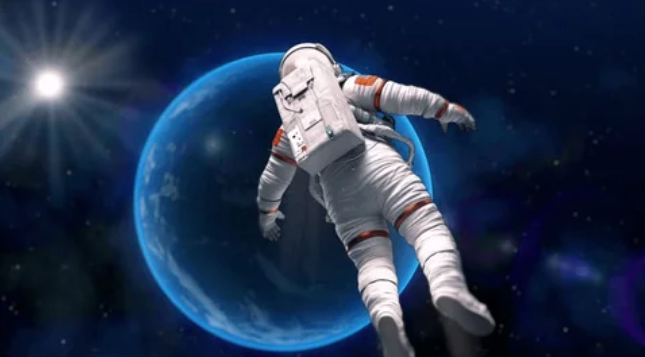
🛰️ How Accurate Are Space Games? Debunking the Myths of Zero Gravity
Space games let us fly starships, build colonies on Mars, and battle aliens in orbit—but how often do they actually get the science right? One of the most commonly misrepresented aspects in these games is zero gravity. From astronauts floating like balloons to dramatic space dogfights with Earth-like physics, zero gravity is often simplified or sensationalized.
In this article, we’ll break down what real zero gravity is, how it behaves in space, and where popular space games get it right—or very, very wrong.
🌌 What Is Zero Gravity, Really?
Let’s clear something up first: zero gravity (also called microgravity) doesn’t mean there’s no gravity at all. It means you’re in free-fall, like when you jump off a diving board—but infinitely. In orbit, astronauts and their spacecraft are constantly falling toward Earth—but they’re moving fast enough sideways that they keep missing it. That’s how the International Space Station stays in orbit.
✅ Fact Check: Astronauts feel weightless not because there’s no gravity, but because everything around them is falling together.
🎮 Zero Gravity in Games: Where They Fly High or Crash Hard
Let’s look at a few common tropes and how they stack up against reality:
🚀 1. Myth: Spaceships Fly Like Jets
Seen in: Star Wars: Squadrons, Mass Effect, Everspace
In most games, spaceships bank and turn like fighter jets in an atmosphere. They have drag, air resistance, and seem to stop mid-space when the engine cuts out.
- Reality Check: In space, there’s no atmosphere. That means:
- No banking turns—rotation is controlled by thrusters, not wings.
- An object in motion stays in motion unless acted upon—no air brakes.
- To stop, a ship must thrust in the opposite direction.
- Games That Get It Right:
- Elite Dangerous (with flight assist off)
- Kerbal Space Program (uses Newtonian physics)
- Children of a Dead Earth (hard sci-fi simulation)
🌌 2. Myth: Zero Gravity Means Floating Effortlessly
Seen in: Dead Space, Prey (2017), Heavenly Bodies
These games show characters drifting slowly through space, often in full control of their movement like they’re underwater.
- Reality Check: Without friction, you’ll keep moving in the same direction unless you push off something. If you spin, you’ll spin forever—unless you counteract the motion.
- What They Get Right:
- Heavenly Bodies nails the tricky controls and physics of floating in zero-g. You must use limbs to push off surfaces or grab handles.
- Prey (2017) simulates zero-g movement in EVA sections with accurate inertia.
🧲 3. Myth: Artificial Gravity Is Common and Easy
Seen in: Starfield, The Expanse: A Telltale Series, Mass Effect
Many ships and space stations in games have normal Earth-like gravity—people walk, run, and stand upright.
- Reality Check: There are only two ways we currently know to simulate gravity:
- Spin the ship to create centrifugal force (like in 2001: A Space Odyssey).
- Use constant acceleration, like 1G from continuous thrust (theoretically possible with future engines).
We do not have artificial gravity tech. And no, magnets or “gravity generators” don’t work like sci-fi suggests.
- Games That Acknowledge This:
- The Expanse (TV series & game) uses rotating ships and magnetic boots in zero-g.
- Kerbal Space Program allows you to build rotating habitats for artificial gravity.
🪙 4. Myth: Items Just Float Around Neatly
Seen in: Inventory systems or slow-motion floating scenes in games like Starfield, Observation, or Tacoma.
- Reality Check: In microgravity, anything not secured floats off—food, tools, even tears from your eyes. Managing this chaos is a big part of real-life space missions.
- Games That Get It Right:
- Observation (2019) accurately portrays objects and movement inside a space station.
- Heavenly Bodies adds complexity by forcing players to manage tools that drift away if not secured.
🔧 5. Bonus Myth: You Can Hear Explosions in Space
Seen in: Almost every game… ever.
- Reality Check: Space is a vacuum, so sound waves can’t travel.
- You’d only “hear” something if you were touching the object that vibrates (like inside your ship).
- Games That Fix This:
- Elite Dangerous filters sound through your ship—external events are muted unless physically connected.
- Dead Space (in vacuum sections) mutes gunfire and screams—eerily realistic.
🧠 Why It Matters: Immersion, Education & Realism
While not every space game needs to be scientifically accurate (sometimes you just want fun and lasers), attention to real zero-gravity physics adds:
- Tension – Navigating realistic space hazards becomes part of the challenge.
- Immersion – Players feel like real astronauts, not just sci-fi heroes.
- Education – Games like Kerbal Space Program and Universe Sandbox teach real physics in hands-on ways.
🧭 The Spectrum: Arcade vs Simulation
| Game | Accuracy | Gravity Realism | Notes |
|---|---|---|---|
| Starfield | 🟡 Medium | Mostly sci-fi | Earth-like gravity on most ships/stations |
| Elite Dangerous | 🟢 High (optional) | Variable | Accurate flight physics when “Flight Assist Off” |
| Kerbal Space Program | 🟢 High | Realistic orbital mechanics | Great for learning Newtonian physics |
| Heavenly Bodies | 🟢 High | Realistic EVA & zero-g | Focused on physical manipulation in space |
| Star Wars Games | 🔴 Low | Fictional | Ships fly like jets; physics defied for drama |
| The Expanse (Game) | 🟡 Medium | Semi-accurate | Good use of mag boots and inertia |
🌠 Conclusion: Fun vs Facts in Zero Gravity
While most space games take creative liberties with zero gravity, a growing number are embracing realism to enhance gameplay and immersion. From the chaotic controls of Heavenly Bodies to the precision of orbital maneuvers in Kerbal Space Program, these games challenge players to think like real astronauts and engineers.
Still, there’s room for all types—arcade-style dogfights and slow, methodical EVA missions can both coexist in the gaming galaxy.
Whether you’re spinning out of control in orbit or just watching your sandwich float away, next time you’re in a space game… stop and ask yourself:
“Is this how it would really work?” 🌍🧑🚀🌌
Want a short version of this for social media or an infographic comparing game realism? Let me know—I’d be happy to format it!