🚀 Exploring the Unknown: The Role of Procedural Generation in Space Games
“In the vast expanse of the cosmos, no two stars are alike, and no two planets need to be either.”
In the limitless expanse of space, there are infinite possibilities—which makes it the perfect setting for procedural generation. But how does this technique help shape the worlds we explore in space games? From endless planets to unique ecosystems, procedural generation allows developers to create vast, dynamic universes that players can explore without the need to manually craft every detail.
Let’s dive into how procedural generation works in space games, its role in shaping gameplay experiences, and how it enables endless exploration in the virtual cosmos. 🌌✨
🌍 What is Procedural Generation?
At its core, procedural generation refers to the use of algorithms to create content automatically, often in a way that’s unique each time. Instead of designing every asset (such as planets, creatures, and terrain) by hand, procedural generation creates them based on a set of rules and random factors, allowing for massive, procedurally generated universes that players can explore.
In space games, procedural generation is used to create entire solar systems, planets, moons, star systems, and more—all of which are vastly different from one another, even if they share a similar basic structure. This means no two players experience the same universe in quite the same way.
🌌 How Procedural Generation Transforms Space Games
🔹 1. Infinite Exploration with No Limits
One of the most appealing features of space games is the ability to explore the unknown. Traditional games, with handcrafted worlds, often hit limits in terms of size and complexity. Procedural generation overcomes this by creating virtually endless universes, ensuring that no two players’ experiences are exactly alike.
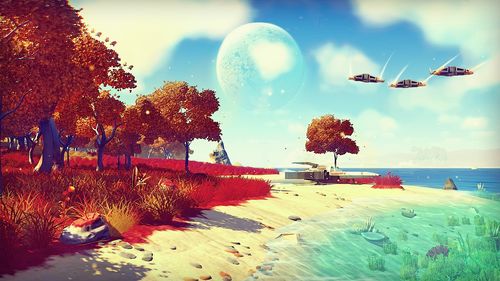
- Why it works: Procedural generation gives the illusion of an infinite universe. A game like No Man’s Sky, for instance, has over 18 quintillion planets, each with different environments, weather patterns, creatures, and resources—created automatically based on algorithms.
- Endless Variety: No two planets in a procedural universe are the same. From rocky moons to lush forests and frozen wastelands, the variety is practically limitless, making each new planet feel like an exciting discovery.
🔹 2. Realistic and Diverse Ecosystems
Procedural generation allows for the creation of dynamic ecosystems that are shaped by the planet’s environment. This leads to biomes and life forms that adapt to specific planetary conditions—just like in real life, where ecosystems develop based on factors like climate, atmosphere, and resources.
- Planetary Conditions: A planet’s size, gravity, distance from its star, and atmosphere all play a role in determining the types of creatures, plant life, and terrain that exist. A barren, rocky desert planet might be home to alien life forms that have evolved to withstand harsh radiation and extreme heat, while a planet with abundant oceans may feature creatures that have adapted to aquatic environments.
- Unique Biomes and Life Forms: The procedural generation system can simulate alien ecosystems with a range of environments and habitats. These can include everything from dense jungles to icy tundras or volcanic plains, all governed by the planet’s unique conditions.
🔹 3. Procedurally Generated Storylines and Quests
While procedural generation is often associated with landscapes and creatures, it can also be applied to in-game events, missions, and quests. Space games can use algorithms to generate random quests that feel fresh and rewarding every time you play.
- Dynamic Storytelling: In games like Elite Dangerous or Star Citizen, missions and storylines can be procedurally generated based on the player’s actions, the state of the universe, and random events. This means players will never encounter the same storyline twice, making each journey feel personal and unique.
- In-Game Events: Randomized events, such as pirate attacks, alien encounters, or stellar anomalies, can happen at any moment, keeping players on their toes and adding a layer of unpredictability to the experience.
🔹 4. Procedural Design in Space Exploration Simulators
One of the most popular uses of procedural generation in space games is in space simulators. These games simulate realistic space travel, where players explore the stars, trade resources, and interact with various species across the galaxy.
- Star Systems and Planetary Bodies: Games like Elite Dangerous and Star Citizen use procedural generation to create vast, explorable star systems and planets, each with its own gravitational pull, orbital mechanics, and resources.
- Why it works: The scale of space is so immense that it’s nearly impossible to manually create the amount of detail needed for an entire galaxy or universe. Procedural generation allows developers to produce realistic star systems and planets without having to handcraft every single detail, ensuring the experience remains immersive and expansive.
🔹 5. Reducing Development Time and Cost
Procedural generation can reduce the workload for developers significantly, as it allows them to create large amounts of content automatically without needing to design each piece manually. This can be especially useful for space games, where the scope of the universe is often far beyond what a small development team could reasonably create by hand.
- Procedural Algorithms: By setting up procedural rules and algorithms to generate planets, moons, stars, and other content, developers can create an entire universe with little manual intervention. The system can create new planets, biomes, and even alien life forms based on a few key parameters, greatly reducing the time and resources needed for development.
- Cost Efficiency: Rather than relying on a massive team to create hundreds of worlds by hand, developers can focus their efforts on other aspects, like gameplay or story, while the procedural generation takes care of the heavy lifting.
🎮 Notable Space Games Using Procedural Generation
🔹 1. No Man’s Sky
Procedural Generation: No Man’s Sky is perhaps the most famous example of procedural generation applied to space games. The game’s algorithm generates 18 quintillion planets, each with its own landscape, flora, fauna, and weather conditions.
- What it does well: The sheer variety of worlds in No Man’s Sky makes exploration feel limitless, with each new discovery feeling fresh and rewarding. The game’s procedural systems also extend to ship types, resources, and missions.
- Challenges: Initially, the procedural generation system was criticized for lackluster creature design and repetitive planetary types, but updates have significantly improved the depth and variety.
🔹 2. Elite Dangerous
Procedural Generation: Elite Dangerous uses procedural generation to create an entire universe made up of billions of star systems, each with a rich history, economy, and trade opportunities.
- What it does well: The game uses procedural algorithms to generate realistic star systems, complete with planets, moons, and stations. The size of the game’s universe allows for deep exploration and trading.
- Challenges: The procedural systems in Elite Dangerous are designed for realistic space travel, meaning long-distance travel can take time, which may be seen as a downside for some players seeking quicker action.
🔹 3. Star Citizen
Procedural Generation: Though still in development, Star Citizen aims to combine handcrafted and procedural content to create a massive space simulation with planets, moons, and space stations, all of which are procedurally generated to offer realistic, persistent environments.
- What it does well: The game uses procedural generation for planets, star systems, and detailed environments like cities, caves, and stations. The result is a seamless blend of exploration, combat, and immersion.
- Challenges: The game’s ambition means that while procedural generation creates variety, it’s also extremely complex, and development is taking longer than anticipated.
🛸 The Future of Procedural Generation in Space Games
As procedural generation technology continues to improve, we can expect to see even more innovative and diverse game worlds. The future holds exciting possibilities, such as:
- More Complex Algorithms: Procedural generation algorithms will evolve to create more realistic and complex ecosystems, planets, and even storylines.
- Dynamic Universes: We may see real-time procedural changes to universes, where planets, ecosystems, or even civilizations evolve based on player actions.
- Integration with AI: As artificial intelligence advances, it could work alongside procedural systems to generate personalized experiences for players, making space exploration feel even more immersive.
🌌 Final Thoughts: The Wonders of the Unknown
Procedural generation plays a pivotal role in space games by allowing players to explore the unknown without encountering the limitations of manually designed worlds. From creating endless planets to simulating realistic space systems, procedural generation allows players to engage with a universe that feels as vast and unpredictable as the real cosmos.
As the technology behind procedural generation advances, space games will continue to offer limitless exploration, diverse ecosystems, and engaging stories—all while making each journey feel unique to the player. The universe truly becomes your playground, and the stars are just the beginning. 🌟
If you’re curious about creating a procedurally generated universe of your own or exploring new possibilities in space games, I’m here to brainstorm with you! 🌠