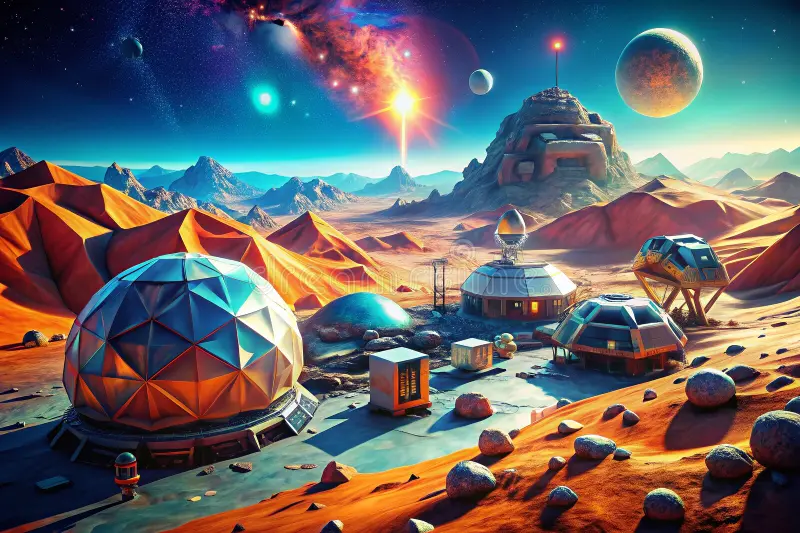
Designing the Ultimate Space Colony: Building Games with a Focus on Exploration
Space colonization has always been a fascinating and aspirational idea, and video games provide a unique platform to bring this dream to life. In the world of space-themed games, the idea of creating and managing a self-sustaining colony on another planet, moon, or space station is a central mechanic for many titles. However, what truly sets some of the best space colony-building games apart is their balance between resource management, exploration, and scientific discovery.
In this article, we’ll explore how video games are designed to simulate the creation of space colonies, the challenges of life in space, and the exploration of uncharted worlds. We’ll also dive into the key features of these games, from colony infrastructure to dynamic exploration mechanics.
1. Key Elements of Designing a Space Colony
Creating a space colony isn’t just about building structures—it’s about understanding the unique challenges that come with living beyond Earth. These challenges add layers of complexity to space colony-building games, requiring players to think creatively and adapt to ever-changing conditions.
1.1. Resource Management
In any colony-building game, managing resources is key to survival. In space, these resources are even more critical and limited:
- Oxygen: A fundamental necessity for human survival. Systems for recycling air and producing oxygen are a must.
- Water: Unlike Earth, water is a precious commodity in space. Players must design efficient systems for collecting and recycling water.
- Energy: Solar panels, fusion reactors, or other space-based energy systems are crucial for powering the colony. Balancing energy production and consumption is a core mechanic.
- Food: In addition to growing crops in space (potentially in hydroponic or aeroponic systems), colony management games often include food production and storage as critical aspects of survival.
1.2. Colony Infrastructure
Building the perfect colony means designing structures that are both practical and resilient:
- Living Quarters: Space habitats must be modular, scalable, and capable of withstanding the harsh environment of space. The colony’s layout might need to account for rotation-based artificial gravity, or rely on special systems for maintaining a low-gravity environment.
- Industrial Complexes: Players must build facilities for manufacturing goods, conducting research, and maintaining equipment.
- Health & Safety: Space colonies are vulnerable to a range of hazards, such as radiation, meteor impacts, and equipment failures. Games must include features that address these risks, such as shields, medical centers, and repair facilities.
1.3. Exploration and Expansion
The best space colony-building games allow players to not only manage their colonies but also explore new worlds:
- Exploring New Planets: Discovering new celestial bodies and landing on uncharted planets is a central mechanic in many space games. This involves scanning planets for resources, life, and viable habitats.
- Spacecraft and Rovers: Designing and sending out spacecraft to explore the stars and discover new places for colonies is an exciting part of these games.
- Alien Life and Diplomacy: Exploration might also lead to first contact with alien civilizations. How players interact with these species—whether through diplomacy, trade, or conflict—can significantly shape the game’s storyline.
2. Top Space Colony-Building Games with Exploration Mechanics
Several games excel at combining colony-building with exploration, creating a unique blend of management and adventure. Here are some of the most notable titles:
2.1. Surviving Mars (2018)
Developer: Haemimont Games
Surviving Mars is one of the most well-known colony-building games that focuses on Mars colonization. Players take on the role of colony managers, tasked with building and maintaining a self-sufficient base on the Red Planet.
- Key Features:
- Resource Management: Oxygen, food, water, and energy must all be carefully managed to ensure the survival of the colony.
- Exploration: While the game is primarily set on Mars, players can send rovers to explore the planet and uncover resources and anomalies.
- Challenges: Random events such as dust storms and resource shortages add depth to gameplay, making it essential to prepare for unexpected disasters.
2.2. Oxygen Not Included (2019)
Developer: Klei Entertainment
In Oxygen Not Included, players are in charge of a group of colonists stranded in an asteroid, tasked with surviving and creating a sustainable colony in an environment where every element of life needs to be managed carefully.
- Key Features:
- Underground Exploration: The game’s focus is on surviving in an underground environment. Players have to dig, mine, and explore to find resources like water, metals, and oxygen while avoiding hazards such as toxic gases.
- Scientific Discovery: Technology research and experimentation are key components of the game. Players can research new technologies to improve their colony’s systems, from oxygen production to space travel.
- Roguelike Elements: Each colony starts in a random environment with different challenges, making exploration and resource management dynamic.
2.3. No Man’s Sky (2016)
Developer: Hello Games
No Man’s Sky is a space exploration game that features procedurally generated planets, each with unique environments and ecosystems. While it’s not purely a colony-building game, it allows players to set up bases and colonies on new worlds.
- Key Features:
- Procedural Generation: Every planet, species, and environment in the game is procedurally generated, ensuring that no two worlds are the same. Players can explore and set up colonies on an endless variety of planets.
- Base Building: Players can build bases to store resources, craft items, and live on foreign planets. Bases are essential for long-term survival and research on alien worlds.
- Exploration: Space exploration is the core of the game, as players venture through the galaxy, discovering new life forms and unlocking hidden secrets.
2.4. The Expanse: A Telltale Series (2022)
Developer: Telltale Games
While not a traditional colony builder, The Expanse series taps into space exploration and the complex dynamics of life in space. Based on the popular Expanse universe, the game focuses on interpersonal relationships, diplomacy, and the harsh realities of life on ships and space stations.
- Key Features:
- Story-driven Exploration: Players must navigate through political intrigue, exploration, and survival in the vastness of space.
- Spacecraft Management: As the player navigates through space, the management of ship resources and crew members is key to survival.
- Dynamic Decision-Making: As with other Telltale games, your choices matter, especially when it comes to diplomacy and exploration.
3. Expanding the Concept: What’s Missing in Space Colony Games?
While there are several great titles that simulate space colonization and exploration, there are areas where the genre could further evolve:
3.1. Advanced Alien Civilizations
Most space colony games focus on resource management and survival. However, incorporating more advanced alien civilizations and the ability to interact with them (either peacefully or through conflict) could provide an added layer of complexity. Diplomatic relationships, trade, and cultural exchanges could be pivotal in expanding the scope of exploration.
3.2. Multi-Colony Networks
Instead of just focusing on a single colony, games could allow players to build and manage a network of colonies across multiple planets or moons. This could introduce elements of logistics, transport, and inter-colony relationships that would enhance both exploration and management.
3.3. More Dynamic Environments
Many space colony games feature static environments or planets. Incorporating planetary weather systems, natural disasters, or even other space-based phenomena (such as supernovae or cosmic radiation) could introduce additional challenges for players to overcome.
3.4. Immersive AI Companions
AI-driven companions or colonists that have unique personalities, motives, and relationships could add an emotional element to colony-building games. These characters could evolve with the colony, offering players more meaningful interactions and a deeper connection to their space-faring endeavors.
Conclusion: The Future of Space Colony Games
Designing the ultimate space colony game is a complex task, blending the challenges of resource management, environmental hazards, and the excitement of space exploration. Games like Surviving Mars, No Man’s Sky, and Oxygen Not Included give players the chance to simulate life beyond Earth, offering both tactical challenges and the thrill of discovering new worlds.
As technology and game design continue to evolve, we can expect even more immersive experiences in space colonization games, with advanced AI, deep space exploration, and rich storytelling elements. The future of space colony games is boundless—just like the universe they explore.